Glass vs. Plastic Food Storage Containers: Which Is Better?
Most kitchens have a drawer full of mismatched plastic containers and lids that don't quite fit. If you're thinking about switching to glass, here's an honest side-by-side look at both, so you can decide what makes sense for how you cook.
Quick comparison
| Glass | Plastic | |
|---|---|---|
| Stains and smells | Resists both | Often stains (tomato, curry) and holds odors |
| Reheating | Microwave and oven safe bases (lids off in the oven) | Microwave only, if labeled safe; not oven safe |
| Freezer | Yes, with headspace and gradual thawing | Yes, can get brittle over time |
| Durability | Lasts for years; can break if dropped | Won't shatter, but warps, scratches and wears out |
| Weight | Heavier | Light, easy for kids' lunches |
| See-through | Crystal clear | Clouds over time |
| Upfront cost | Higher | Lower |
Where glass wins
No stains, no lingering smells
Glass is non-porous, so last night's marinara or curry doesn't leave an orange film or a smell behind. A run through the dishwasher and it looks new again.
Store, reheat and serve in one dish
This is the big one for busy weeknights. Glass bases can go from the fridge to the microwave or a preheated oven, so leftovers don't need to be moved to another dish. Always take plastic lids off before the oven.
It lasts
Plastic containers slowly warp in the dishwasher, scratch, and cloud up. A good glass set can last for years, which is why it often costs less over time even though it costs more upfront.
You can see what you have
Clear glass makes it easy to spot leftovers before they're forgotten, which helps cut food waste.
Where plastic still makes sense
- Kids' lunches and anything that gets tossed in a backpack
- Picnics, the beach or the pool, where glass shouldn't go
- Sending food home with guests when you don't want the container back
Plenty of families keep a few plastic containers for on-the-go and switch everything else to glass.
What is borosilicate glass?
Borosilicate glass is made with boron, which makes it expand much less than ordinary glass when it heats up or cools down. That gives it better resistance to thermal shock, the cracking that can happen when glass goes through a sudden temperature change. It's the same type of glass used in lab glassware.
Better resistance doesn't mean indestructible, though. To keep any glass container in great shape:
- Preheat the oven before putting glass in.
- Don't move glass straight from the freezer into a hot oven. Thaw it in the fridge first.
- Set hot glass on a dry towel, trivet or wooden board, not a cold or wet counter.
- Let hot food cool a bit before it goes into the fridge or freezer.
More tips in our glass storage care guide.
How to pick a glass set
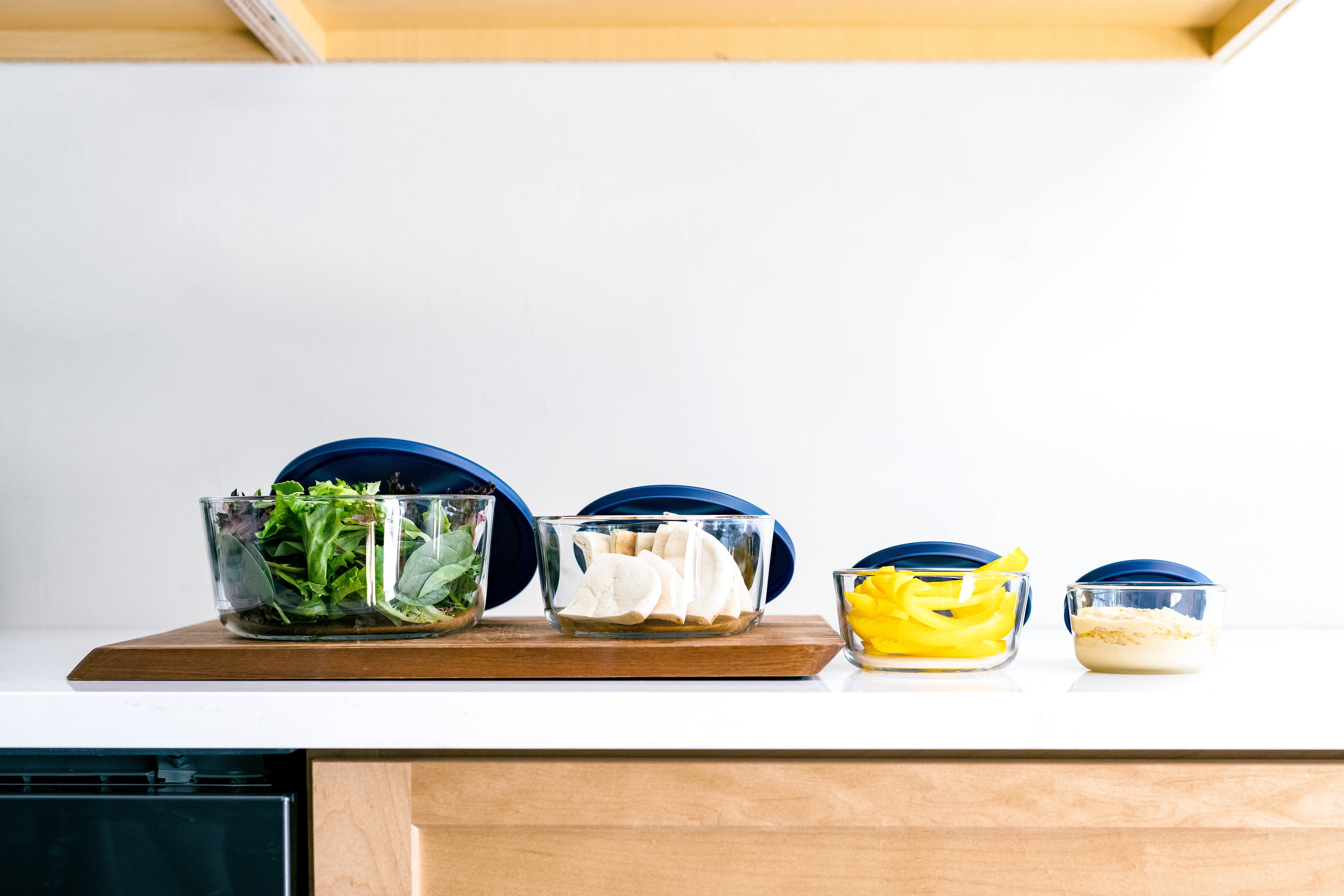
- Get a mix of sizes. Small for sauces and snacks, medium for single meals, large for family-size leftovers and salads.
- Look for airtight, leak-resistant lids that snap on securely. Ours use BPA-free lids.
- Think about storage space. Nesting sets stack inside each other so they take up less cabinet room.
Good starting points: our 16-piece round nesting set covers almost everything, and our single-size sets let you build your own mix, from 1-cup to 6.55-cup containers.
The verdict
For everyday leftovers and meal prep at home, glass is the better long-term choice: no stains, no smells, reheats in the same dish, and lasts for years. Keep a few plastic containers for lunches on the go. Browse the full glass food storage collection, with free US shipping on orders over $35.
Meal Prep in Glass Containers: A Beginner's Guide
How Long Do Leftovers Last in the Fridge? A Simple Guide (Plus Storage Tips)
Related Posts

Meal Prep in Glass Containers: A Beginner's Guide

Bamboo vs. Acacia vs. Rubberwood: Choosing the Best Cutting Board

Chef Knife vs. Santoku: Which Kitchen Knife Do You Need?

How Long Do Leftovers Last in the Fridge? A Simple Guide (Plus Storage Tips)
How to Care for Your Wooden Cutting Board: A Simple Guide for Longevity 🌿