How Long Do Leftovers Last in the Fridge? A Simple Guide (Plus Storage Tips)
Whether it's the day after Thanksgiving or a big Sunday batch cook, the same question always comes up: how long are these leftovers actually good for? Here's the short answer, a quick reference chart, and the storage habits that keep food fresh and safe.
The short answer: 3 to 4 days in the fridge
According to the USDA, cooked leftovers can be kept in the refrigerator for 3 to 4 days or frozen for 3 to 4 months. Frozen food stays safe longer than that, but it slowly loses moisture and flavor, so 3 to 4 months is the sweet spot for quality.
One important note: you usually can't see, smell or taste the bacteria that cause food poisoning. If you can't remember when you made something, don't trust the sniff test. When in doubt, throw it out.
Quick reference: common leftovers
| Leftover | Fridge | Freezer (best quality) |
|---|---|---|
| Cooked turkey or chicken | 3 to 4 days | 3 to 4 months |
| Cooked ham | 3 to 4 days | 1 to 2 months |
| Soups and stews | 3 to 4 days | 2 to 3 months |
| Cooked pasta | 3 to 4 days | 2 to 3 months |
| Mashed potatoes | 3 to 4 days | 1 to 2 months |
| Cooked vegetables | 3 to 4 days | 3 to 4 months |
| Pizza | 3 to 4 days | 1 to 2 months |
Times are general guidelines for food that was cooked, cooled and refrigerated promptly.
How to store leftovers the right way
1. Get food into the fridge quickly
Don't leave cooked food sitting out for hours. Refrigerate leftovers within 2 hours of cooking (1 hour if it's a hot day). Your fridge should be at 40°F or below.
2. Use smaller, shallow containers
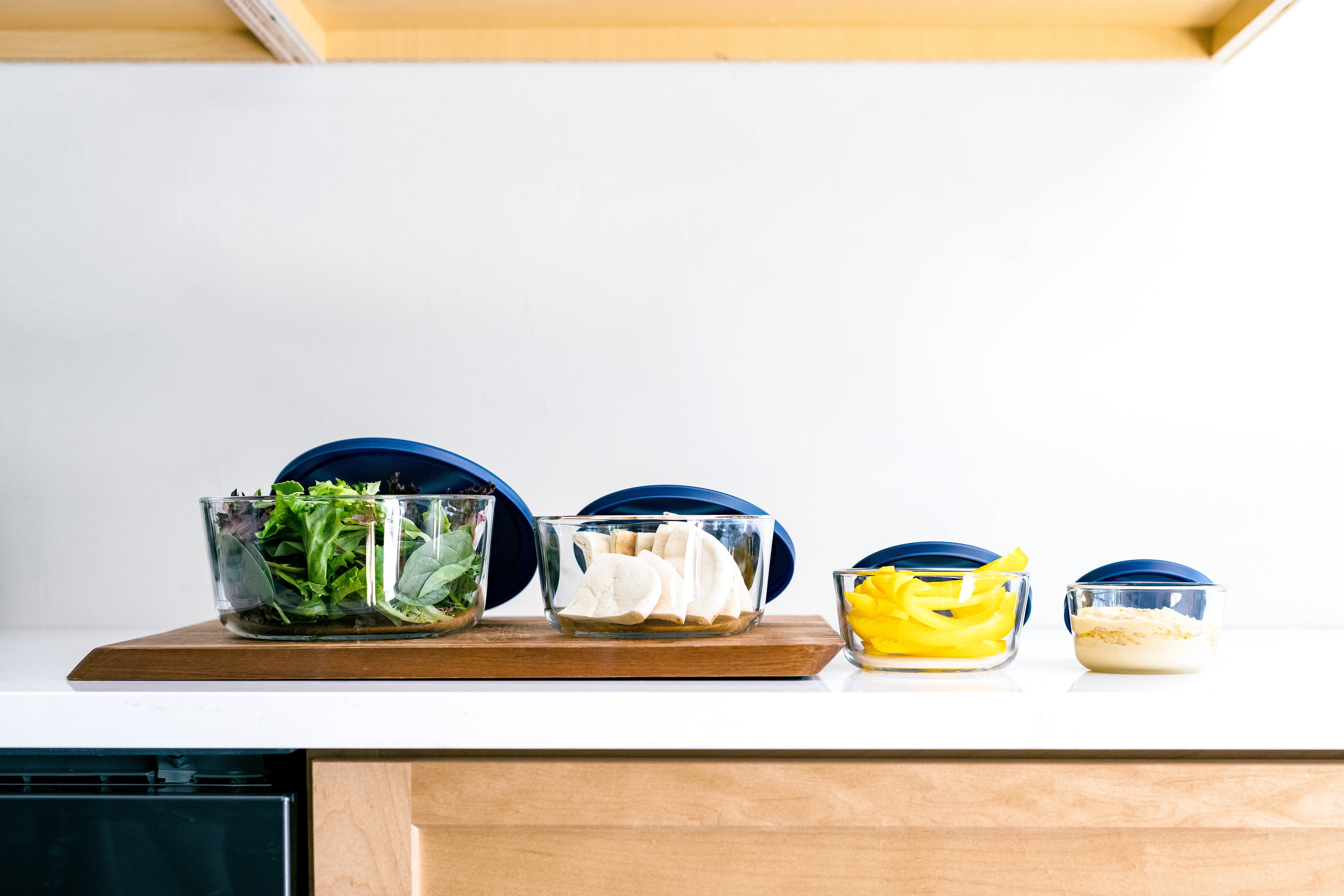
A big pot of chili cools slowly in the middle. Divide large batches into smaller, shallower containers so food chills quickly and evenly. Our 2-cup round glass containers are a good size for single portions, and the 4-cup containers work well for sides and family portions.
3. Seal it airtight
An airtight lid keeps food from drying out, stops fridge odors from mixing, and helps prevent freezer burn. Snap the lid on fully every time.
4. Label and date everything
A strip of masking tape and a marker solves the "how old is this?" problem. Write the food and the date on the lid.
5. Freeze what you won't eat in 4 days
If you know you won't get to it, freeze it right away instead of waiting until day 4. Let hot food cool before it goes in the freezer, and leave a little room at the top of the container for liquids to expand.
Why glass containers make leftovers easier
- You can see what's inside. Clear glass means less forgotten food at the back of the fridge.
- No stains or lingering smells. Glass doesn't absorb tomato sauce stains or curry smells the way many plastic containers do.
- Reheat in the same container. Our borosilicate glass bases are microwave and oven safe, so you can store, reheat and serve in one dish. Just remove the lid before reheating in the oven.
- Easy cleanup. Glass goes in the dishwasher and comes out clean.
Glass care tip: even borosilicate glass shouldn't go through sudden temperature swings. Let a container from the freezer thaw in the fridge before it goes into a hot oven, and set hot glass on a towel or trivet rather than a cold or wet counter. See our full glass storage care guide.
The bottom line
Eat refrigerated leftovers within 3 to 4 days, freeze anything you won't get to, and store it all in shallow, airtight containers you can see into. If your container drawer is a mess of mismatched lids, take a look at our glass food storage collection, with sizes from 1 cup to 6.55 cups and free US shipping on orders over $35.
Meal Prep in Glass Containers: A Beginner's Guide
Glass vs. Plastic Food Storage Containers: Which Is Better?
Related Posts

Meal Prep in Glass Containers: A Beginner's Guide

Bamboo vs. Acacia vs. Rubberwood: Choosing the Best Cutting Board

Chef Knife vs. Santoku: Which Kitchen Knife Do You Need?

Glass vs. Plastic Food Storage Containers: Which Is Better?
How to Care for Your Wooden Cutting Board: A Simple Guide for Longevity 🌿